Back to all cases
CASE STUDY / AI & Data Science
Maritime – High‑Risk & Anomaly Prediction
Maritime, Vessel Monitoring & Public SafetyIntegrated national weather, vessel static data, and real‑time AIS streams into ClickHouse and deep learning to predict grounding and anomalous behaviors and help prevent maritime incidents.
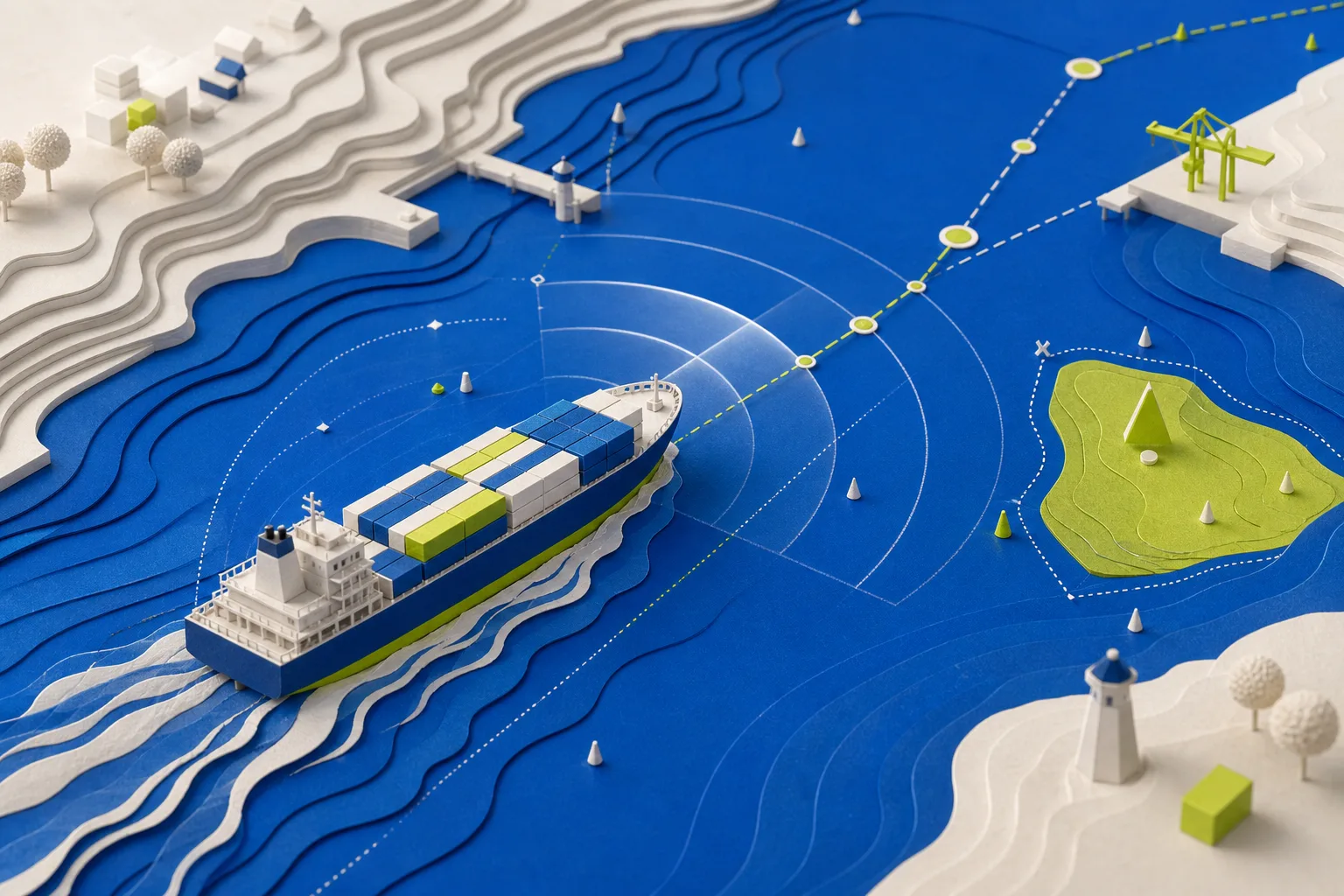
Delivery Details
This project integrated multiple real-time and historical sources, including weather information, vessel master data, and AIS (Automatic Identification System) streams. The data-engineering workflow used ClickHouse as a real-time layer for temporal alignment, trajectory cleaning, feature aggregation, and quality controls; the data-science workflow modeled grounding risk and anomalous navigation behavior, then connected predictions to monitoring and alert interfaces. Deployed in a private environment, the system supported continuous maritime monitoring, risk prioritization, and earlier operational intervention.
Industry Context
Vessel-risk monitoring must handle continuous trajectories, real-time weather, vessel heterogeneity, and rare incidents that fixed rules cannot fully capture. The data platform and models must jointly support low-latency processing, risk prioritization, private deployment, and operator review.
Business Problem
Maritime risk data is real-time, heterogeneous, and high-stakes, making early warning difficult.
What I Built
Integrated weather, AIS, and vessel static data into ClickHouse streaming and deep learning pipelines.
Business Impact
Supported continuous anomaly and grounding-risk prediction so maritime operators could identify high-risk situations earlier.
For career conversations, advisory work, or a concrete Data & AI project, feel free to get in touch.